By Johana Padilla
The continuing conflict in the Middle East and the disruption of global oil supply routes have greatly affected fuel prices around the world, including in the Philippines. As a country heavily dependent on imported oil, Filipinos immediately felt the impact through rising transportation fares, increasing electricity costs, and higher prices of basic commodities. The weakening value of the Philippine peso against the US dollar further worsened the situation, making imported fuel more expensive.
For many Filipino workers already living paycheck to paycheck, the fuel hike intensified existing economic struggles. Rising transportation costs meant that workers had to spend more simply to get to work, while food and utility prices also continued to increase. The crisis once again highlighted how vulnerable many workers remain during periods of global instability, especially when wages are already insufficient to meet daily needs.
The Oil Deregulation Law, which removed government control over fuel pricing, has also been criticized by lawmakers and labor groups as one reason authorities struggle to respond quickly to fuel price increases. Meanwhile, taxes imposed on petroleum products continue to add to the rising cost of fuel. Although proposals to suspend or reduce these taxes have been raised, labor groups argue that stronger and more immediate government intervention is needed to protect workers and commuters.
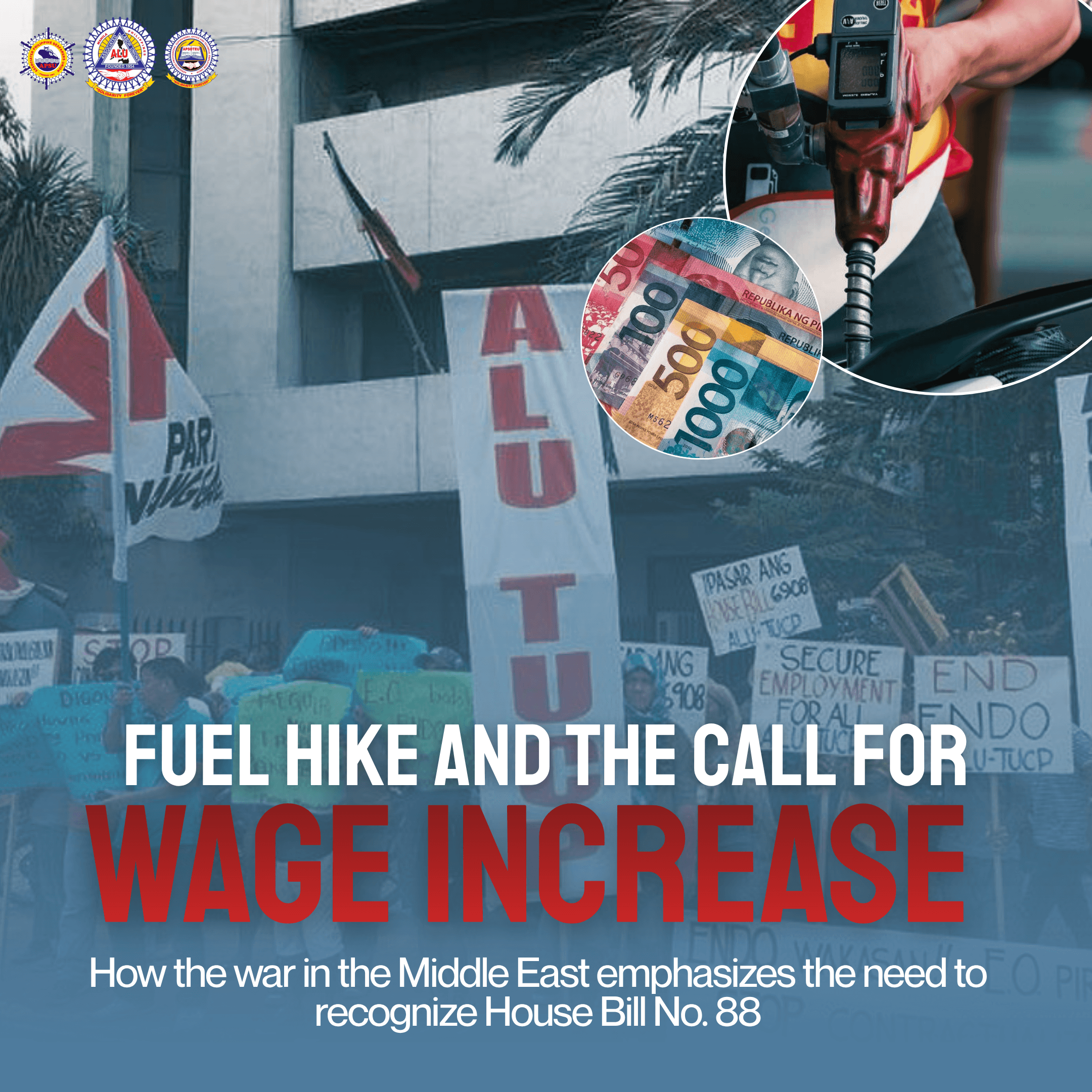
In response to the worsening situation, the Trade Union Congress of the Philippines (TUCP) renewed its call for the passage of House Bill No. 88, which seeks a ₱200 across-the-board increase in the minimum wage of private sector workers. TUCP emphasized that inflation, fuel hikes, and increasing utility costs continue to erode the purchasing power of Filipino workers. Labor groups maintain that temporary aid and subsidies may help, but long-term solutions must include meaningful wage increases and stronger worker protections.
The National Wages and Productivity Commission (NWPC) announced wage adjustments across several regions in 2026, with the National Capital Region maintaining the highest daily minimum wage at ₱695. However, labor advocates point out that these increases still fall far below the estimated cost of living for many Filipino families. While a minimum wage worker in NCR may earn around ₱13,900 for a regular 20-day work month, estimates show that the monthly cost of living for a single person can already reach around ₱30,000.
Because of this, TUCP continues to push for urgent wage reforms and stronger protections for workers amid inflation and economic instability. Labor groups have also called on the government to consider emergency cost-of-living allowances, fuel tax relief, and expanded subsidies for workers and commuters. While the government has explored free ride programs and fuel subsidies, labor organizations stress that these measures alone are not enough without substantial wage increases.
The continuing fuel crisis has once again highlighted the long-standing issues faced by Filipino workers: low wages, rising living costs, and economic policies that often leave ordinary people vulnerable during global crises. More than a discussion on oil prices alone, the issue has become a broader call for economic justice. Labor groups continue to assert that workers deserve wages that allow them not only to survive, but to live with dignity.