By Steffany Tolentino
Amid the continuing rise in fuel prices earlier this year, President Ferdinand Marcos Jr. proposed the implementation of a four-day work week in parts of the government and encouraged similar arrangements in the private sector. The measure aimed to reduce fuel consumption, lessen transportation expenses, and ease the financial burden on workers and employers during the height of the energy crisis. Under the arrangement, employees would complete the required forty-hour work week through longer working days without reducing salaries or benefits, while essential and frontline services continued regular operations.
The proposal came as the Philippines experienced another wave of inflation caused by escalating tensions in the Middle East, which heavily affected global oil prices. Because the country remains highly dependent on imported fuel, Filipino workers immediately felt the impact through higher transportation fares, increased electricity costs, and rising prices of basic commodities. Several government offices later adopted compressed work arrangements and hybrid schedules as part of energy conservation efforts.
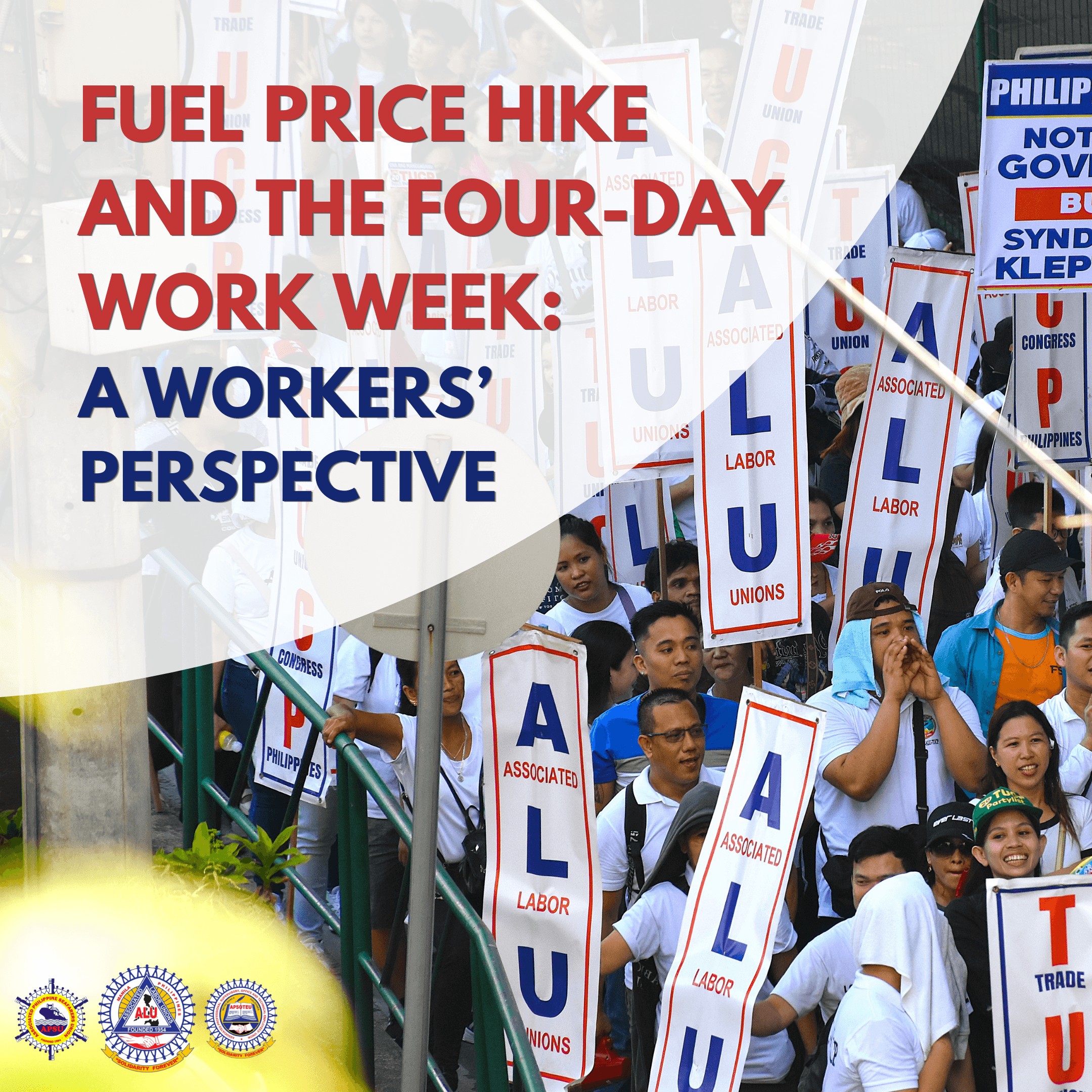
During this period, the Trade Union Congress of the Philippines (TUCP) called on the government to implement stronger measures that would directly support workers struggling with the increasing cost of living. In March 2026, TUCP renewed its proposal for an emergency cost of living allowance (COLA), particularly for minimum wage earners and workers in the transportation sector who were among the first affected by fuel price hikes. The labor center also pushed for the suspension or reduction of value-added tax (VAT) and excise taxes on petroleum products, arguing that these significantly contribute to the soaring prices of fuel and electricity.
TUCP spokesperson Carlos Miguel Oñate explained that the proposed emergency allowance could range from PHP 100 to PHP 200 as a legislated wage increase to help workers cope with inflation and rising daily expenses. In an interview with DZMM Radyo Patrol, he emphasized the need for immediate government action:
“Dun naman po sa mga manggagawa o ang minimum wage earners ay nananawagan po kami sa pamahalaan na muling balikan ‘yung usapan tungkol sa isang dagdag-suweldo… malinaw naman pong may emergency po tayong hinaharap.”
While the four-day work week was later implemented in several government offices beginning March 9, 2026, labor groups stressed that it should not be treated as a “one-size-fits-all” solution. According to TUCP, labor-intensive industries such as manufacturing and construction face different realities, since extending work beyond eight hours may increase fatigue, workplace accidents, and declining productivity.
In another interview with Super Radyo DZBB, Carlos Miguel Oñate clarified:
“Unfortunately, hindi siya puwede sa mga labor intensive industries like manufacturing and construction, wherein kapag pinagtrabaho natin ‘yung mga manggagawa na higit otso-oras nang sunod-sunod ay tumataas po ‘yung kanilang tiyansa ng disgrasya sa trabaho o kaya pagbaba ng kanilang productivity.”
TUCP also emphasized that any compressed work arrangement must be based on mutual agreement between labor and management and should fully comply with labor laws, including proper overtime compensation and protection of workers’ benefits.
As fuel prices and inflation continue to affect Filipino households, labor groups maintain that temporary work arrangements alone are not enough to address the deeper economic problems faced by workers. Calls for living wages, fuel tax relief, affordable transportation, and stronger social protection remain central demands of the labor movement. For many workers, the issue is not only about adjusting work schedules, but also about ensuring that wages remain sufficient and dignified amid rising costs of living.